Merry Christmas! :) To one and all, I hope you had a completely splendid day. :) And don't just remember Christ as the reason for the season, I tell you- God is the one and only reason for *existence*. And He loves you. Yeah, I know. It IS awesome. :)
With that said, spread the cheer! :)
Tuesday, December 25, 2012

Friday, December 14, 2012
An Online, Interactive, Horse Color Genetics Game
Whilst browsing around on Tuesday evening, I found a very well put-together game. More than that, though, it was a horse color genetics game. And interactive. :D
Here is the link: http://www.jenniferhoffman.net/horse/horse-color-genetics.html Kudos to Jennifer Hoffman for making this wonderful tool!
If you start from the actual webpage (I just linked you to the game itself), a guided tour will explain colors and alleles as you go along.
The thing I didn't like about the guided game was that it didn't record previous changes to the horse's color. For example, I had the horse as a seal bay, I proceeded to the next color gene, and the horse changed to a bay, chestnut, black, or otherwise. What?
For that reason I skipped to the end, where I could change any and all alleles, and all at the same time.
It seems people really, really, like this game. One of the comments complained that the game allows you to make impossible colors (such as being homozygous white, which produces a foal that dies in embryo). However, that has been fixed. Now, if you'll try it, you'll be able to have one copy of the white gene, but with both of the copies, the horse vanishes and the text says "Embryonic Lethal". The game also is accurate so far as the four linked or almost-linked KIT alleles.
Another accurate feature - it shows the gray (G) gene as dominant. You can have a multitude of colors underneath, but if a horse has the gray gene in it's phenotype, this will cover everything except white (or pinto) markings.
Interested in horse color genetics? Read more articles here!
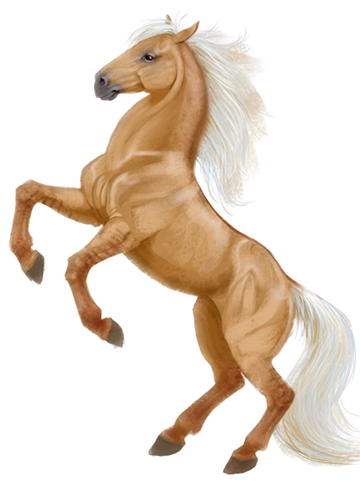
Here's a replica of the stable's AQHA stud, Billy. :)

Here is the link: http://www.jenniferhoffman.net/horse/horse-color-genetics.html Kudos to Jennifer Hoffman for making this wonderful tool!
If you start from the actual webpage (I just linked you to the game itself), a guided tour will explain colors and alleles as you go along.
The thing I didn't like about the guided game was that it didn't record previous changes to the horse's color. For example, I had the horse as a seal bay, I proceeded to the next color gene, and the horse changed to a bay, chestnut, black, or otherwise. What?
For that reason I skipped to the end, where I could change any and all alleles, and all at the same time.
It seems people really, really, like this game. One of the comments complained that the game allows you to make impossible colors (such as being homozygous white, which produces a foal that dies in embryo). However, that has been fixed. Now, if you'll try it, you'll be able to have one copy of the white gene, but with both of the copies, the horse vanishes and the text says "Embryonic Lethal". The game also is accurate so far as the four linked or almost-linked KIT alleles.
Another accurate feature - it shows the gray (G) gene as dominant. You can have a multitude of colors underneath, but if a horse has the gray gene in it's phenotype, this will cover everything except white (or pinto) markings.
Interested in horse color genetics? Read more articles here!
Here's a replica of the stable's AQHA stud, Billy. :)
Monday, December 10, 2012
The Silver (Dapple) Gene
Just recently, I've dived (just a short dive though) back into horse genetics, colors, and research. This time, however, I have a specific area that I'm gaining knowledge on- the Silver (ZZ gene).
It really is an interesting gene. Similar to the Cream and Champagne genes, it is a dilution gene. However, it goes a smidgen more complex than just that- the ZZ allele will only affect eumelanin; that is, black hair color. The only other melanin in horses is pheomelanin (the red/brown/yellow coloring), and that is left unaffected.
Before I get to the fun part, there are a few more factors to cover. The ZZ gene is located on horse Chromosome 6, in the PMEL17 gene. It is a simple dominant allele, so if a horse has this trait, it will appear in the phenotype. The one exception to this is if the horse is a chestnut, in which case it'll take either breeding or testing to tell.
EDIT: The gene may not be a simple dominant allele. Please read my later blog post on it!
By breeding, let me use this example to explain what I mean: If you breed your chestnut mare to a black stud, and produce a silver bay, you then know that your mare carries silver-positive allele.
Sure, one may think that breeding to find out true color (which one cannot always find through this method) saves you...say, $40 by not testing. However, if color is an element of your breeding program, and you can scrap together 40 bucks, do it. It isn't that hard- just follow the instructions here.
Okay, yay! Time for the fun stuff. :) Let's start with a few base colors + silver gene = the answer.
Black + ZZ = Chocolate (or Blue) Silver
Bay + ZZ = Bay Silver
Chestnut + ZZ = Chestnut (but carries the Silver allele)
And of course, there are combinations of base color + Silver + other dilution or extension genes. However, I'll save that for another time.
Do you remember the Miniature mare that foaled out this June? She's actually a silver, as she has all the characteristics that the Silver allele elicits, and her sire had the allele. I'm almost certain that she's a seal bay silver, but nothing's been verified.
If you don't want to go digging through my awesome blog posts to find the picture of Bunny, here she is. And who knows, maybe Dove will be a Silver carrier as well. (:
It really is an interesting gene. Similar to the Cream and Champagne genes, it is a dilution gene. However, it goes a smidgen more complex than just that- the ZZ allele will only affect eumelanin; that is, black hair color. The only other melanin in horses is pheomelanin (the red/brown/yellow coloring), and that is left unaffected.
Before I get to the fun part, there are a few more factors to cover. The ZZ gene is located on horse Chromosome 6, in the PMEL17 gene. It is a simple dominant allele, so if a horse has this trait, it will appear in the phenotype. The one exception to this is if the horse is a chestnut, in which case it'll take either breeding or testing to tell.
EDIT: The gene may not be a simple dominant allele. Please read my later blog post on it!
By breeding, let me use this example to explain what I mean: If you breed your chestnut mare to a black stud, and produce a silver bay, you then know that your mare carries silver-positive allele.
Sure, one may think that breeding to find out true color (which one cannot always find through this method) saves you...say, $40 by not testing. However, if color is an element of your breeding program, and you can scrap together 40 bucks, do it. It isn't that hard- just follow the instructions here.
Okay, yay! Time for the fun stuff. :) Let's start with a few base colors + silver gene = the answer.
Black + ZZ = Chocolate (or Blue) Silver
Bay + ZZ = Bay Silver
Chestnut + ZZ = Chestnut (but carries the Silver allele)
And of course, there are combinations of base color + Silver + other dilution or extension genes. However, I'll save that for another time.
Do you remember the Miniature mare that foaled out this June? She's actually a silver, as she has all the characteristics that the Silver allele elicits, and her sire had the allele. I'm almost certain that she's a seal bay silver, but nothing's been verified.
If you don't want to go digging through my awesome blog posts to find the picture of Bunny, here she is. And who knows, maybe Dove will be a Silver carrier as well. (:
 |
| Bunny, a Silver Dapple mare |
Subscribe to:
Posts (Atom)